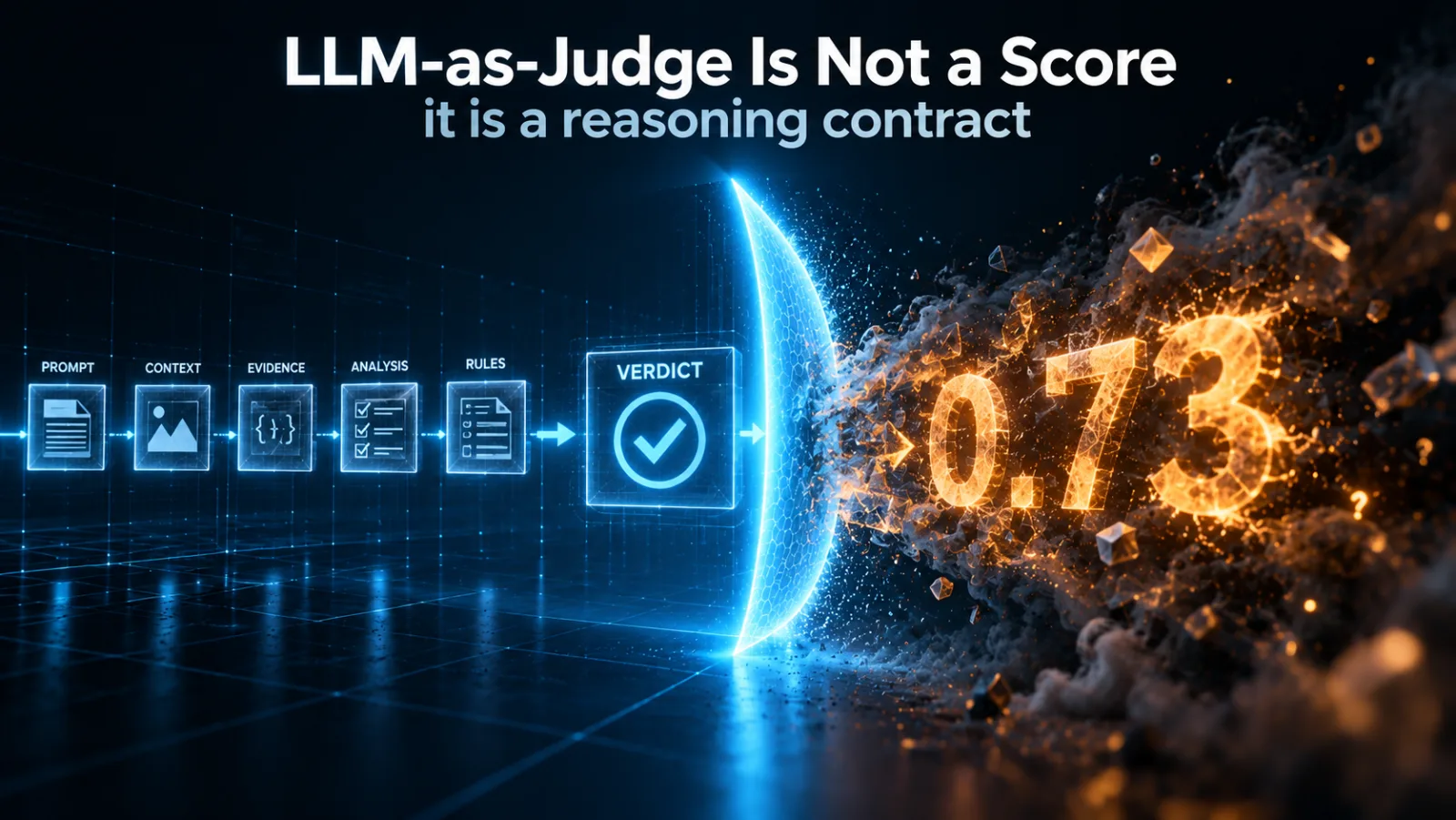
Most teams use an LLM judge as a scorer: prompt it, read the number, gate on it. That is the mistake. A scorer returns a number you cannot audit and cannot trust. A judge is a contract with four clauses: the evidence it is allowed to use, the rubric that binds its reasoning, the schema it must answer in, and the external check that can veto it. Get those four right and the number means something. Skip them and you have automated a vibe.
Read More
A webhook is not an HTTP request. It is an untrusted, replayable, out-of-order, at-least-once message stream that happens to arrive over POST, and it has a public address. Most webhook bugs are not injection. They are the distributed-systems failures you already know (replay, duplicate delivery, reordering, retry storms) showing up at an endpoint nobody treated like a message consumer. Here is the trust boundary, the five failures, and the actual checks, at a depth you can run against your own endpoint.
Read More
Jev is a decision model that returns a calibrated confidence with every answer. I ran 1,200 agent tool-call decisions through it for about five cents to see whether that confidence is worth routing on. It held up against adversarial traps better than I expected. But the confidence scalar the API returns is worse calibrated than the raw class probabilities it ships in the same response, and the place it breaks is not the hard cases. It is the ambiguous ones.
Read More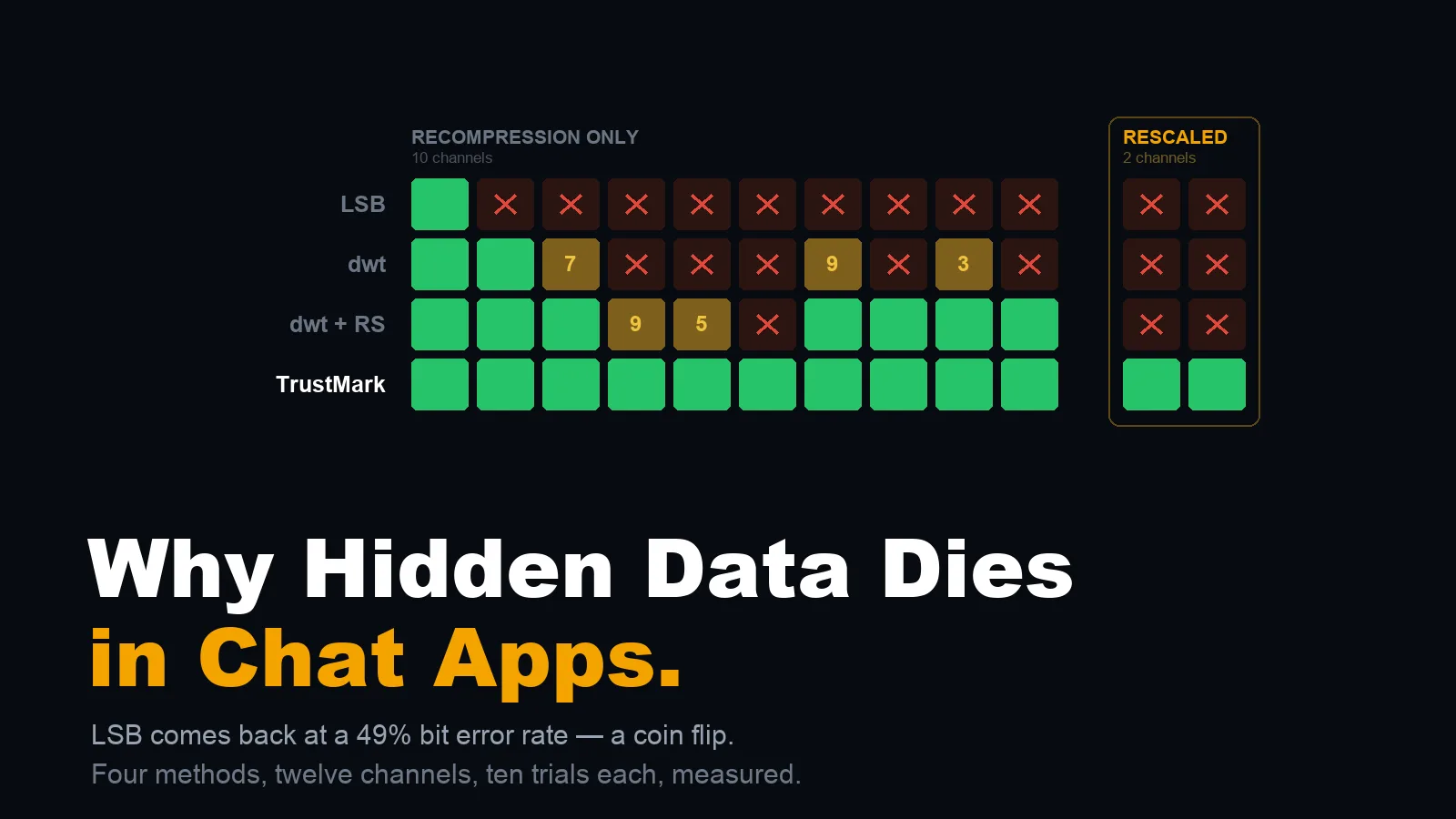
Every 'hide a message in a photo' tutorial uses LSB. Push it through a simulated WhatsApp send and the bit error rate is 49%, which is a coin flip: not degraded, gone. Four methods measured across twelve channels — why Reed-Solomon takes WhatsApp from 0/10 to 10/10, why resize defeats every classic method, and why the learned watermark that clears it is also the least visible.
Read More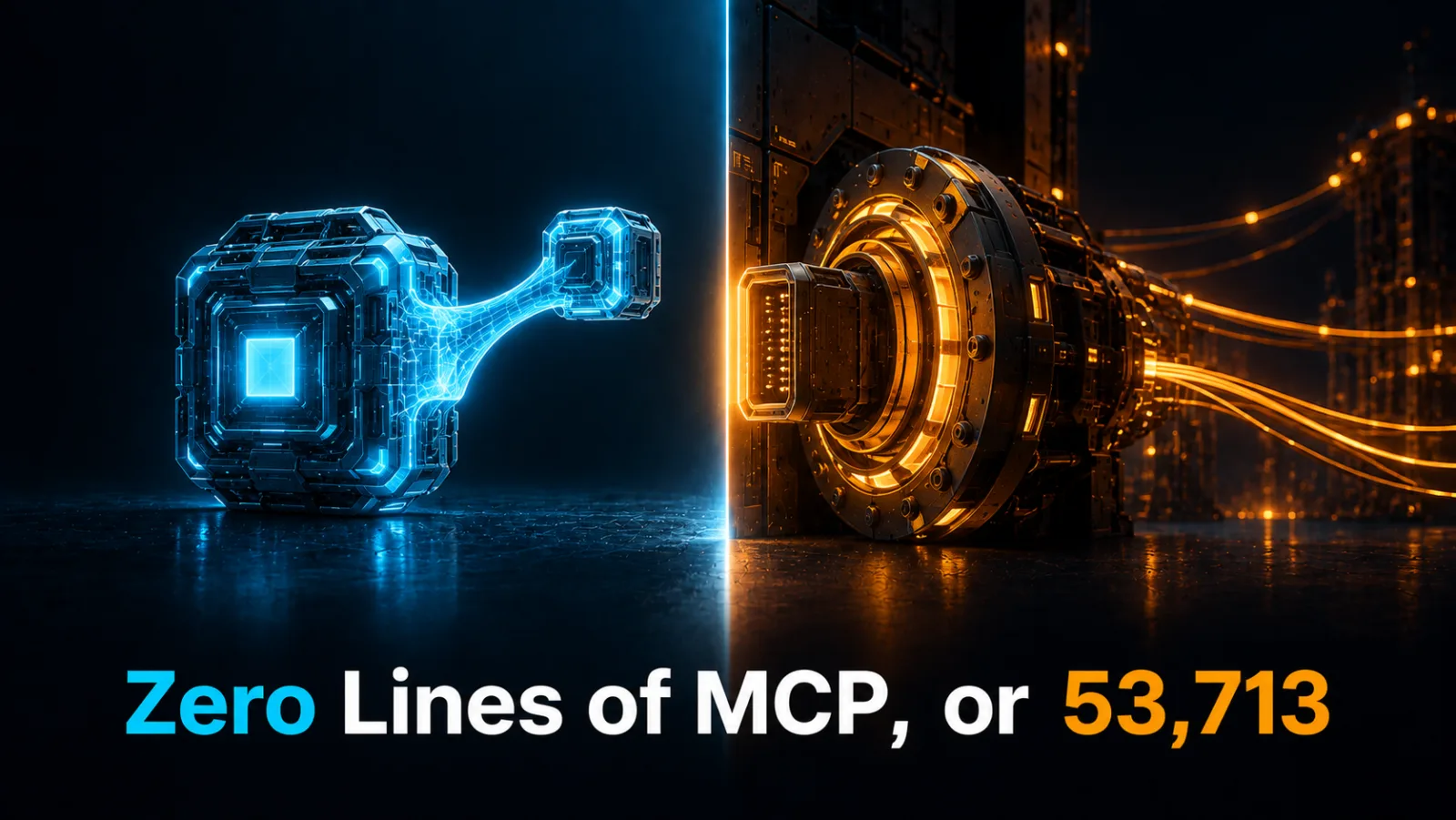
One harness treats MCP as core infrastructure and spends tens of thousands of lines on it. The other refuses it on principle and tells the agent to write its own tools instead. Both positions are coherent, and the disagreement is not about capability. It is about who owns the schema, what a stable boundary is worth, and what you pay for it in tokens and attack surface on every single request.
Read More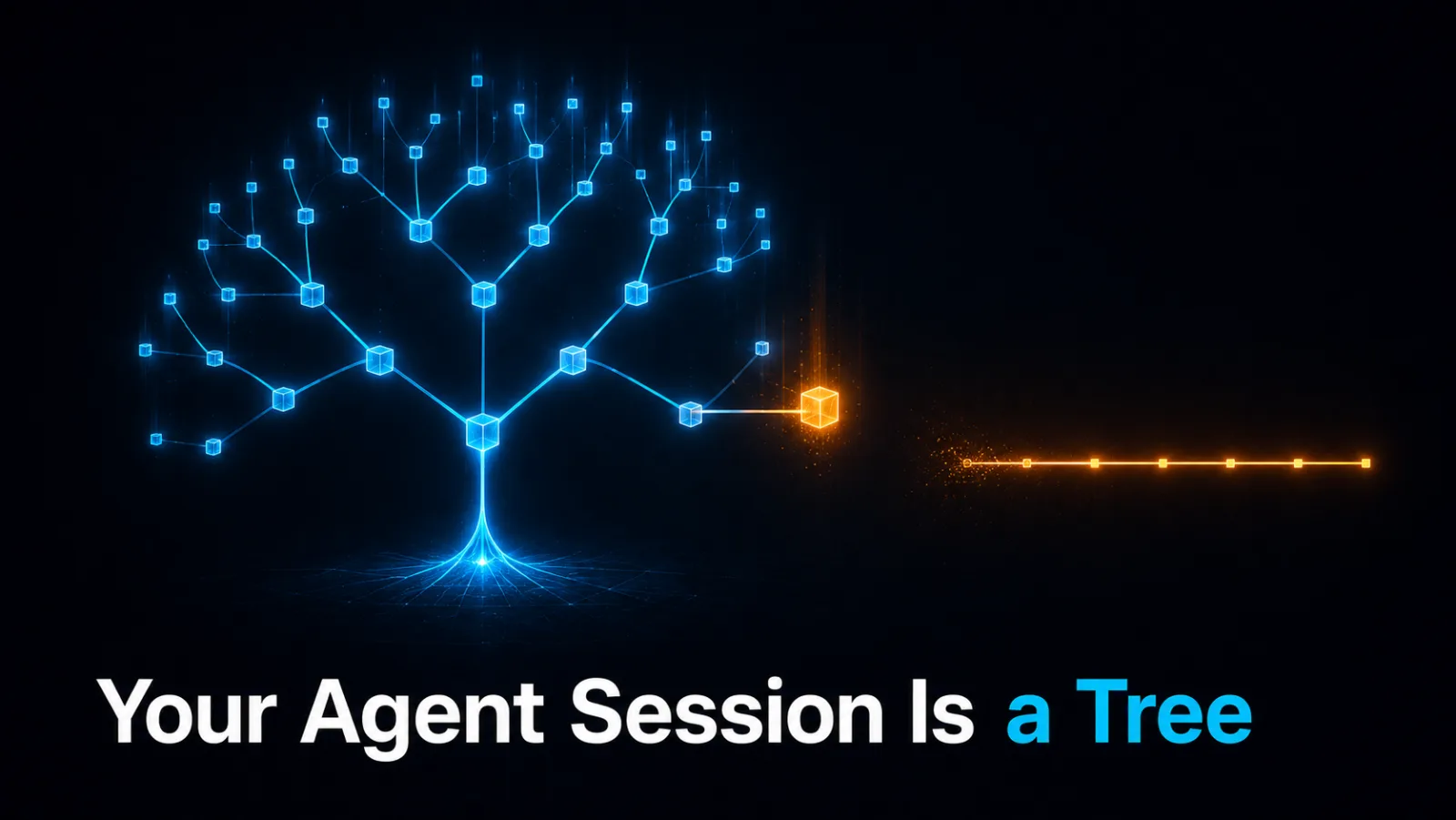
Codex made Item a wire type and thread/fork a protocol call. Pi gave every session entry a parentId. Claude Code compresses the transcript in five stages. Three harnesses, three answers to what the durable unit of agent state actually is, and the answer decides whether running out of context costs you a summary or costs you the work.
Read More
Pi is famous for a system prompt under a thousand tokens. I measured it: 550. Then I measured the four tool schemas that ship beside it in every single request: 588. The celebrated number is the smaller half. Meanwhile Codex ships a different prompt length for every model, from 1,436 to 5,070 tokens, and the reason why is the most useful thing in either codebase.
Read More
OpenAI changed two API settings on ARC-AGI-3 and GPT-5.6 Sol went from 13.3% to 38.3% while spending six times fewer output tokens. Same model, same weights, same benchmark. The official harness had been throwing away the model's reasoning after every move. Which means the score was never a measurement of the model, and neither is most of what we compare.
Read More
512 bytes, no operating system, no standard library, no memory management — BIOS drops you at 0x7c00 in 16-bit real mode and everything after that is yours to build. A hand-written Stage-1 MBR, line by line, and why the exercise surfaces every abstraction you normally stand on.
Read More
Step through a hand-written x86 bootloader in GDB, hit a far jump, and watch your function names turn to garbage. Nothing crashed — CS changed, and in real mode that moves every address out from under GDB's symbol table. Why it happens and how to keep symbols following you.
Read More