I Tested Higgsfield's Minecraft 'Prompt-to-Build.' It Generates Shapes, Not Scenes.
I ran eight building prompts through Higgsfield's Minecraft prompt-to-build. It nails single shapes in a minute but drops exact sizes, materials, doors, and whole scenes.
Table of Contents
Higgsfield shipped a Minecraft “prompt-to-build” feature: a mod that drops a “Supercomputer” block into your world, takes a free-text prompt, and generates a structure in-world a minute later. I spent one session putting real building prompts through it to see what it actually does, not what the landing page says it does. Eight prompts, fixed screenshots, an in-world walkthrough, and a scoring rubric.
The short version: it behaves like a single-cohesive-3D-form generator with strong canonical priors, not an architecture or scene engine.
tl;dr — Higgsfield’s in-world prompt-to-build produced recognizable single forms (a sphere, a tower, a castle gatehouse, including a functional walkable gate) in about a minute. But in my samples it dropped discrete constraints (exact size, specified materials, door position), failed to compose a coherent multi-object scene in all three scene prompts I tried, and exposed no validation signal for whether the output met the prompt. The behavior is consistent with a mesh-to-voxel pipeline: generate one shape, color-map it to blocks. Strong on shape, weak on constraints, composition, and function.
How it appears to work (inferred from behavior)
I did not decompile the mod or capture a network trace, so this is the most likely explanation, not a confirmed fact. The observed behavior is consistent with a mesh-generation plus voxelization pipeline: a text prompt produces a 3D mesh in the cloud, which is then voxelized, mapped to a limited block palette, and placed in-world.
If that model is right, it accounts for most of what I saw. A color or texture sampler would pick block colors rather than materials. A mesh encodes a shape, not discrete numeric or positional constraints. And a layout of separate objects has no single form to generate from. One in-game block check supports it directly: a region that looked like lava read as minecraft:orange_concrete with no fluid placed at all — a solid block chosen by color.
Method
- Environment: Minecraft Java 1.21.1 + NeoForge 21.1.233 + the Higgsfield mod, creative mode, superflat world.
- Flow: place the Higgsfield “Supercomputer” block, set
Type: Structure, enter the prompt, insert a blank Structure medium, Generate, then print the result in-world. - Cost: about 1.15 credits per build (the UI estimates 2). Failed jobs are not charged — the one prompt that timed out cost nothing.
- Prompts: eight total — a single object, a constrained object, a functional compound form, a negative-constraint prompt, and three multi-object scene prompts — plus one geometric-primitive control (a sphere) to check that outputs are genuinely prompt-conditioned.
- Scoring: 1 to 5 per dimension (prompt adherence, constraint adherence, spatial/functional, editability, visual, reliability). Single rater, from fixed screenshots plus an in-world walkthrough.
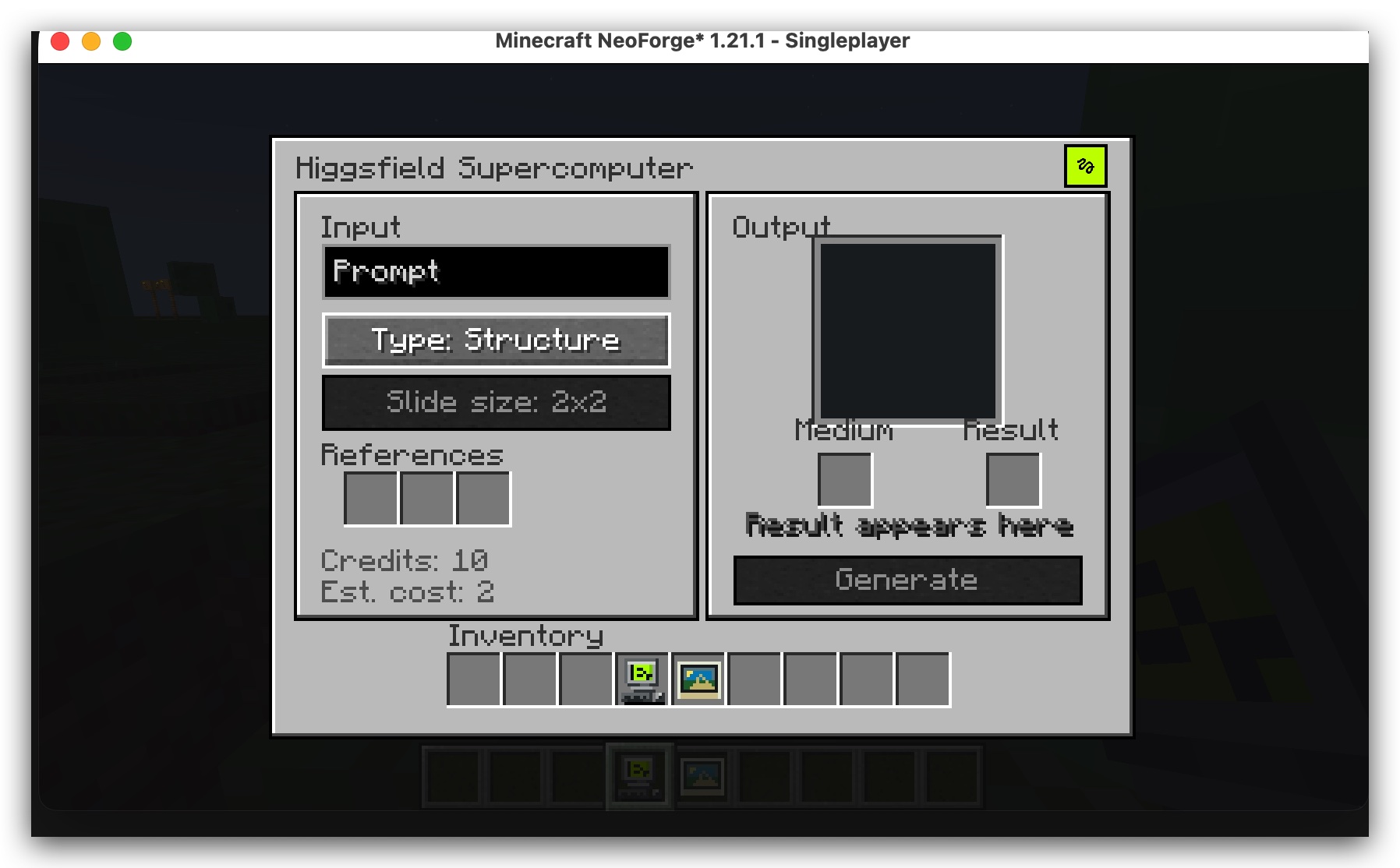 The in-world “Supercomputer” panel: a free-text prompt,
 Type: Structure, a blank Structure medium, and a credit estimate. This is the entire interface.
Results at a glance
| ID | Prompt class | Time | Outcome | Adher | Constr | Spatial | Edit | Visual | Reliab |
|---|---|---|---|---|---|---|---|---|---|
| P1 | single object — watchtower | ~1 min | recognizable tower, wrong material/size | 2 | 1 | 2 | 2 | 3 | 5 |
| P2 | object + discrete constraints — 15×15 cottage | ~1 min | doorless lumpy wall, unrecognizable | 1 | 1 | 1 | 1 | 2 | 5 |
| Ctrl | geometric primitive — “a giant sphere” | ~1 min | clean voxel sphere | 5 | — | — | — | 4 | 5 |
| P3 | multi-object scene — market | 8+ min | timeout, no output | — | — | — | — | — | 1 |
| P4 | functional compound form — gatehouse | ~1 min | strong: 2 towers + walkable gate | 4 | 4 | 4 | 3 | 4 | 5 |
| S2 | multi-object scene — houses + path + trees | ~2 min | elements present, incoherent scale/layout | 2 | — | 2 | 2 | 2 | 5 |
| S3 | multi-object scene — campsite | ~2.5 min | collapsed into one teal blob | 1 | — | 1 | 1 | 2 | 5 |
| P5 | negative constraint — 8×8 base, no glass/lava/water/redstone | ~1 min | giant slab, not 8×8 | 1 | 1 | 1 | 1 | 2 | 5 |
Per-prompt findings
P1 — single object: watchtower
“Build a small wooden watchtower, 10 blocks tall, with a ladder, a roof, and a viewing platform.”
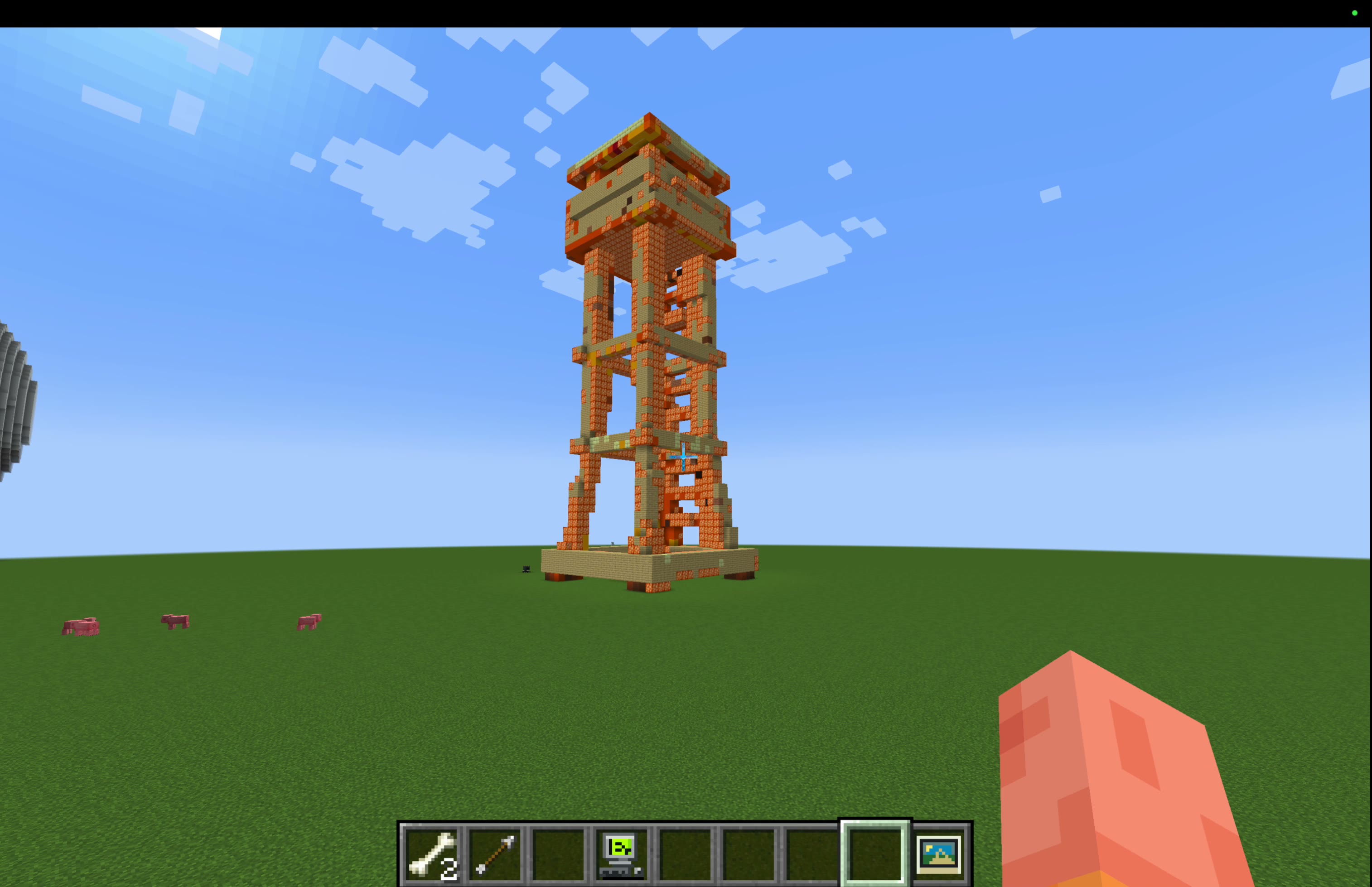
It reads clearly as a tall tower, so the shape prior comes through. The discrete constraints did not. “Wooden” came out as orange terracotta and honeycomb blocks — the output matched colors, not the material word “wood.” “10 blocks tall” became 20-plus. The ladder, roof, and platform are vaguely suggested by geometry but are not functional Minecraft elements. The surface shows the voxelization artifacts you’d expect: eroded edges, speckled palette quantization, asymmetry.
P2 — object + discrete constraints: 15×15 cottage
“Build a 15 by 15 block cottage using mostly wood and stone. Entrance on the south side, inside walkable.”
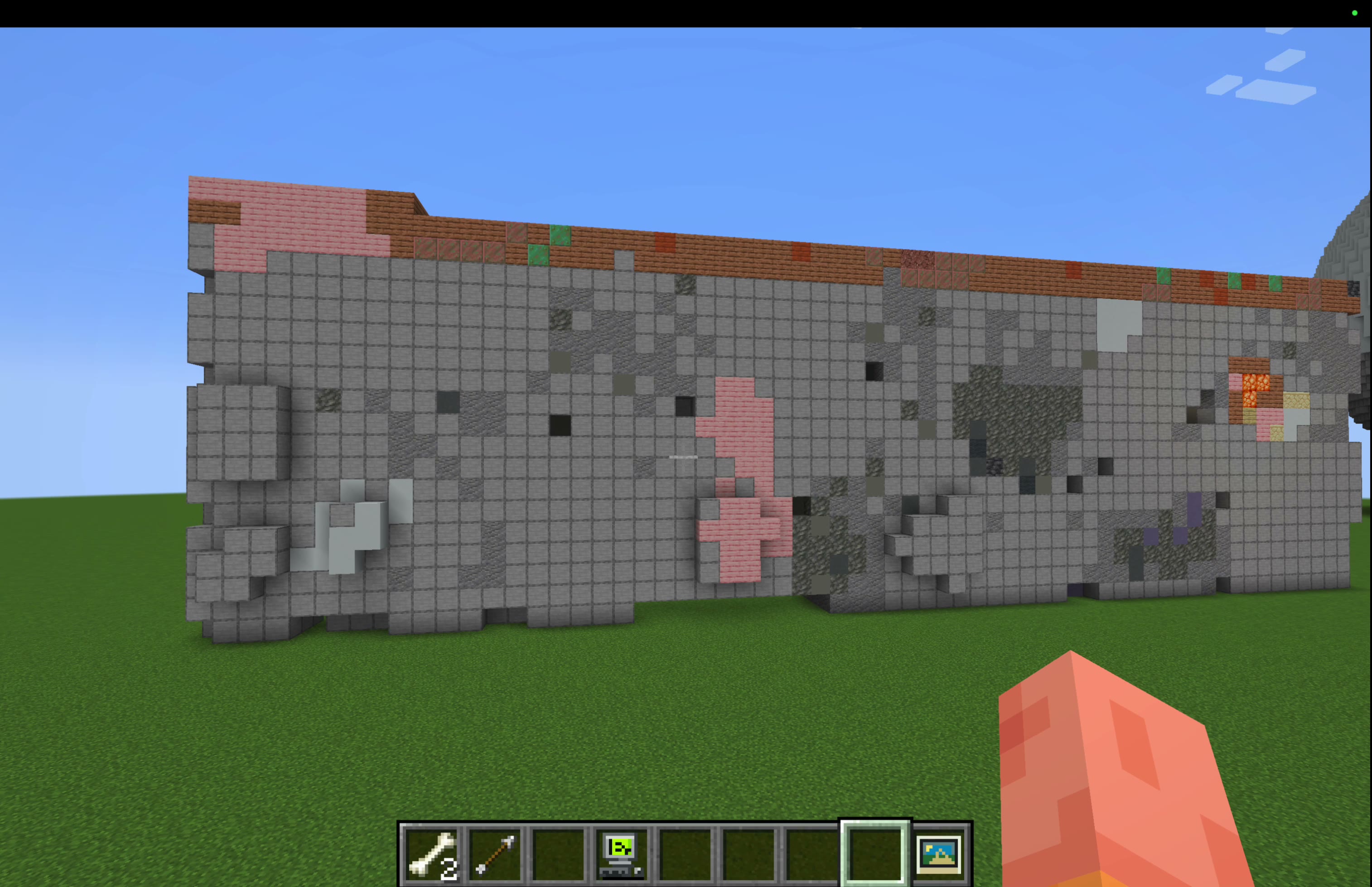
The most constrained prompt produced the worst result. It does not read as a cottage at all — a long lumpy grey wall with a red-orange top band, random holes, and stray noise blocks. Every discrete constraint failed: the footprint is far wider than 15×15, it’s a wall rather than an enclosed cottage, there’s no wood, and there’s no door on any side (confirmed in world — you cannot enter it). This is the clearest example of the pattern in my samples: the more a prompt depends on discrete, checkable requirements, the less of it came through.
Control — geometric primitive: “a giant sphere”
“A giant sphere.”
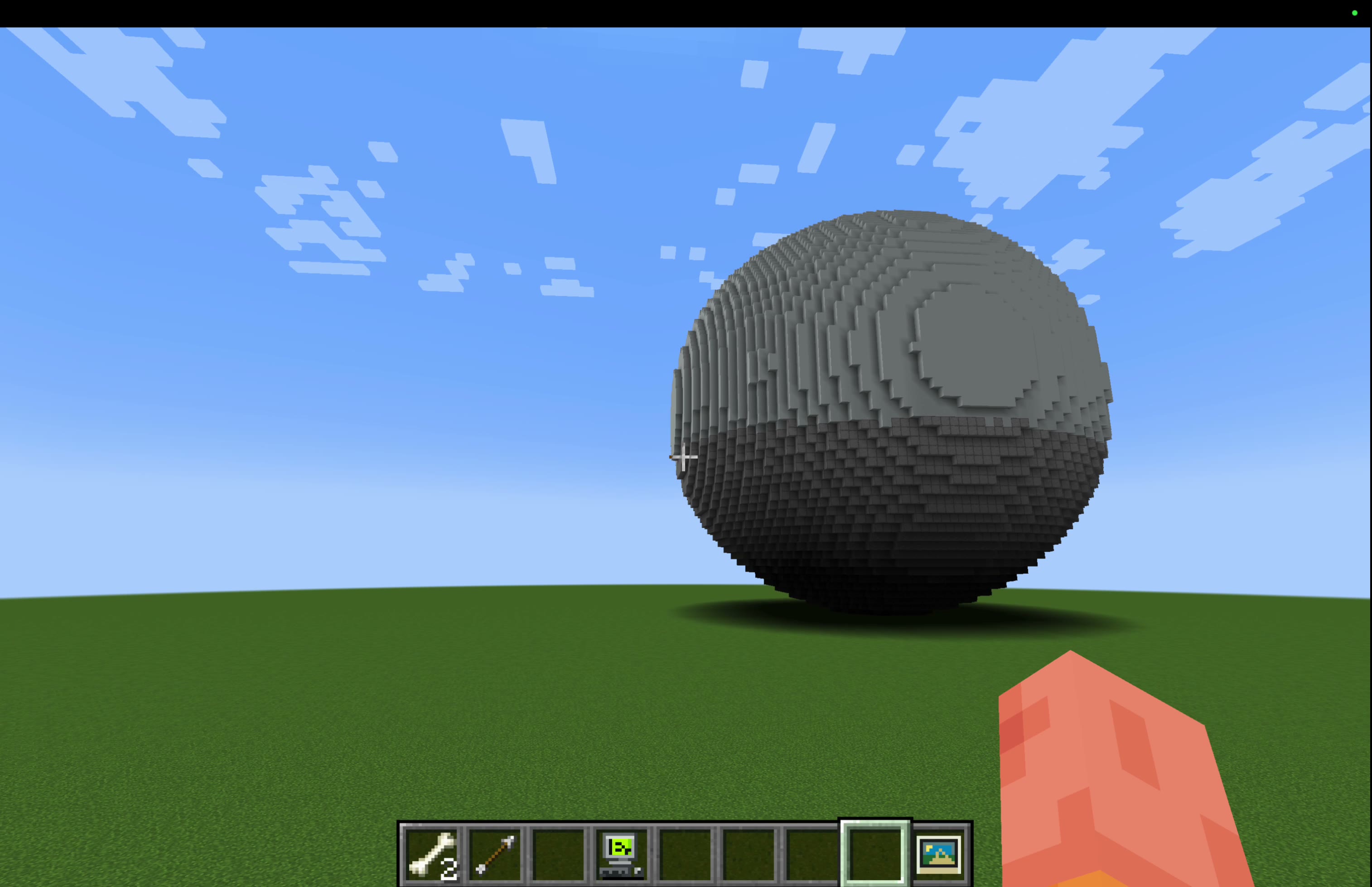
I ran this to settle one question: are outputs actually driven by the prompt, or just canned blobs? The result is an unmistakable, clean voxel sphere with the classic concentric-ring stepping. That’s strong evidence of prompt-conditioning, and with a fresh superflat world it rules out “it was already there.” It also fits the pattern from the other direction: a clean geometric form came out clean. Output looked best when the prompt carried no discrete semantic constraints.
P3 — multi-object scene: market (timeout)
“Build a small village market: four stalls around a central well, with paths connecting them.”
No screenshot, because there was no output. The job hung for 8-plus minutes and never produced a result, so I abandoned it (no credits charged). This is the first of three prompts that ask for multiple independent objects in a spatial layout rather than a single connected form. This one simply hung.
P4 — functional compound form: gatehouse (best result)
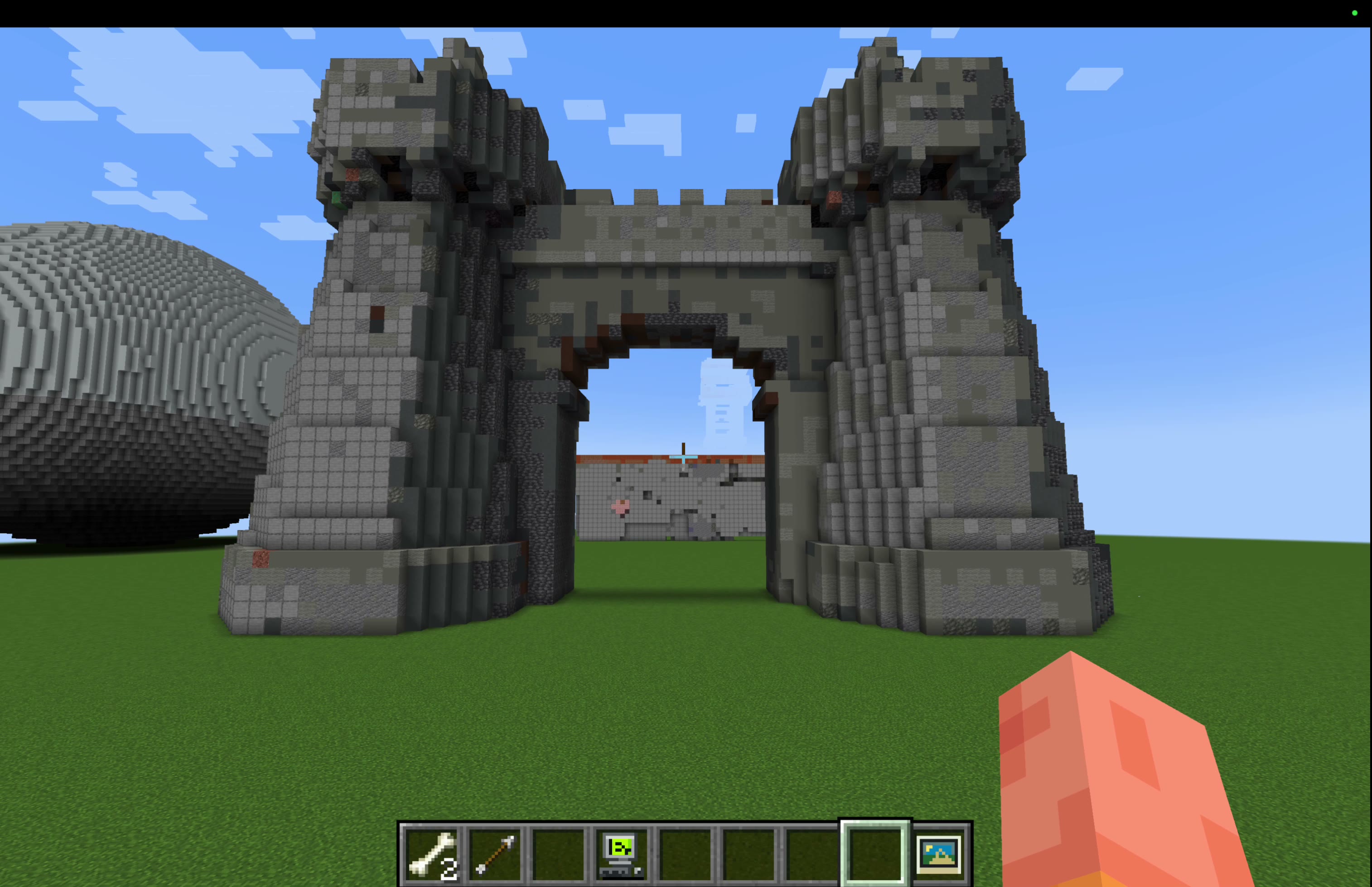
“Build a gatehouse with two towers and a central gate players can walk through.”
The strongest output in the session, and an important counter-example. It reads clearly as a castle gatehouse: two flanking towers, a central arch, battlements. Done in about a minute. Crucially, the functional requirement — “players can walk through” — was honored: the central gate is genuinely passable (verified by walking through it in world). The material came out stone-like, which fits the canonical “castle” prior, but the prompt did not specify a material, so that’s a visual/prior win, not constraint-following.
P4 sharpens the conclusion. A gatehouse has named sub-parts (two towers plus a gate) yet still generated fast and well, because it is one cohesive, canonical form — unlike the market scene of separate objects.
S2 — multi-object scene: houses + path + trees
“Three small houses arranged in a row along a dirt path, with a tree between each house.”
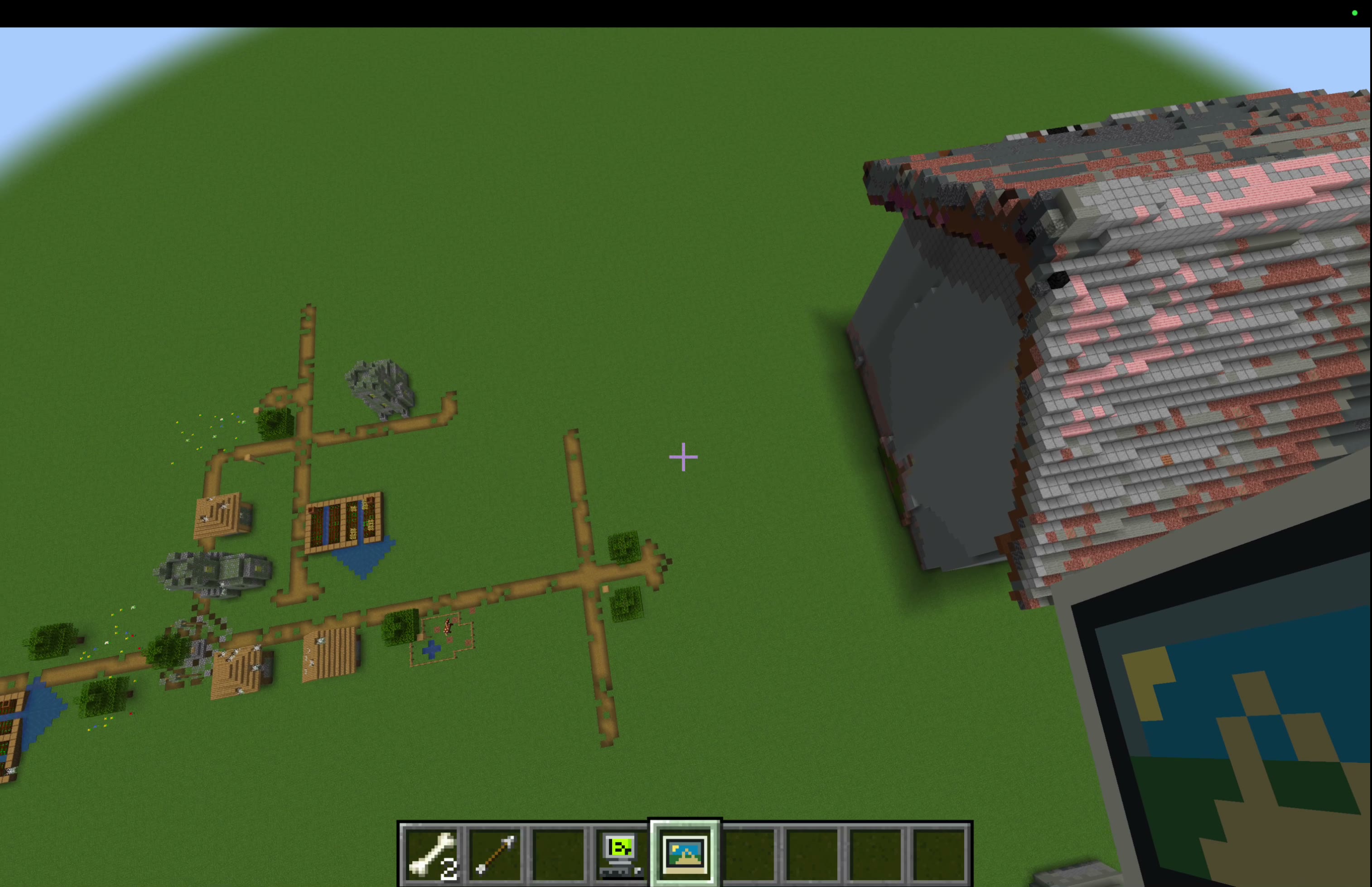
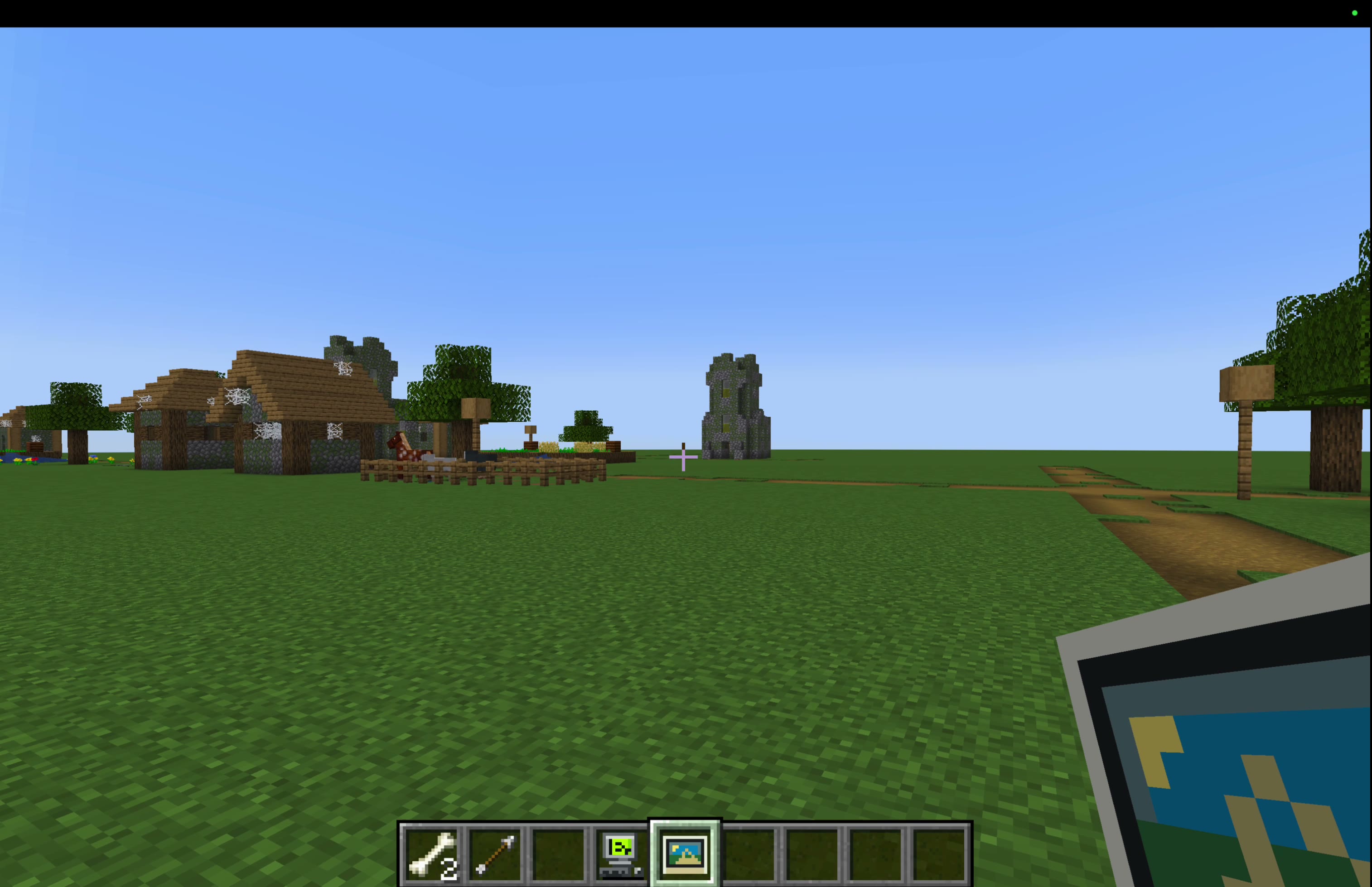
Done in about two minutes, so scene prompts do not always hang — the market timeout looks like a one-off. And it genuinely emitted the scene elements: dirt paths, several separate small structures, trees. But the composition is incoherent: wildly inconsistent scale (one oversized house next to a miniature cluster), scattered placement, blobby objects. It read the scene as one mesh to voxelize, not as an arrangement of objects. So “it cannot do scenes” is too strong; “it does not compose scenes coherently” is accurate.
S3 — multi-object scene: campsite
“A campsite with two tents, a central campfire, and logs around it to sit on.”
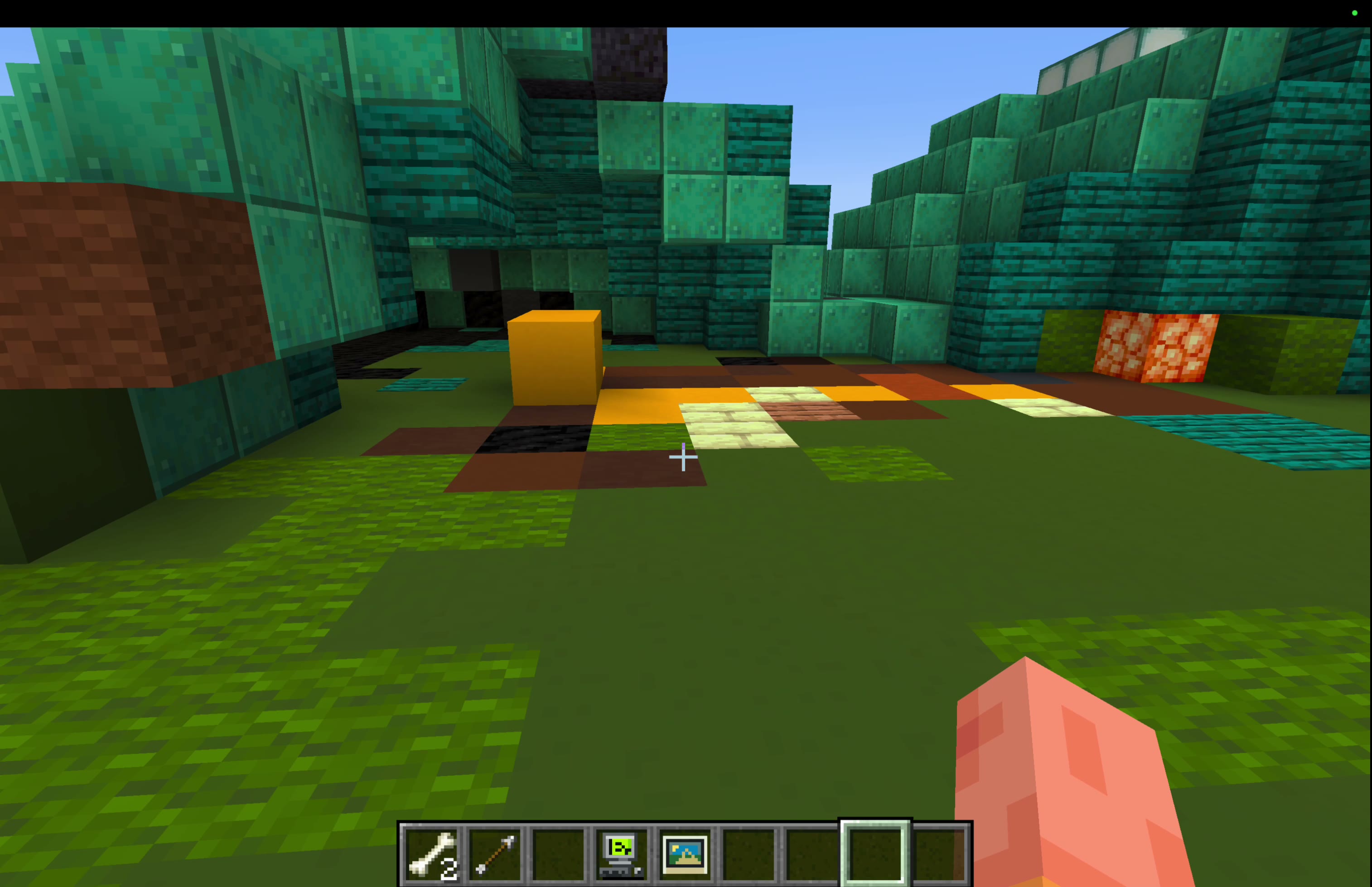
The opposite failure mode from S2. Instead of scattering, it collapsed into a single mound of teal blocks (the two tents merged into one), with a small patch of orange blocks that loosely reads as a campfire. No distinguishable tents, no logs. Elements are hinted by color (tents teal, fire orange) but the arrangement is gone.
Across the three scene prompts, none produced a coherent, usable multi-object layout. They failed three different ways: hang, scatter, collapse. The scene elements can show up; the composition did not.
P5 — negative constraint: 8×8 base, forbidden materials
“Build a tiny 8 by 8 starter base. Do not use glass, lava, water, or redstone.”
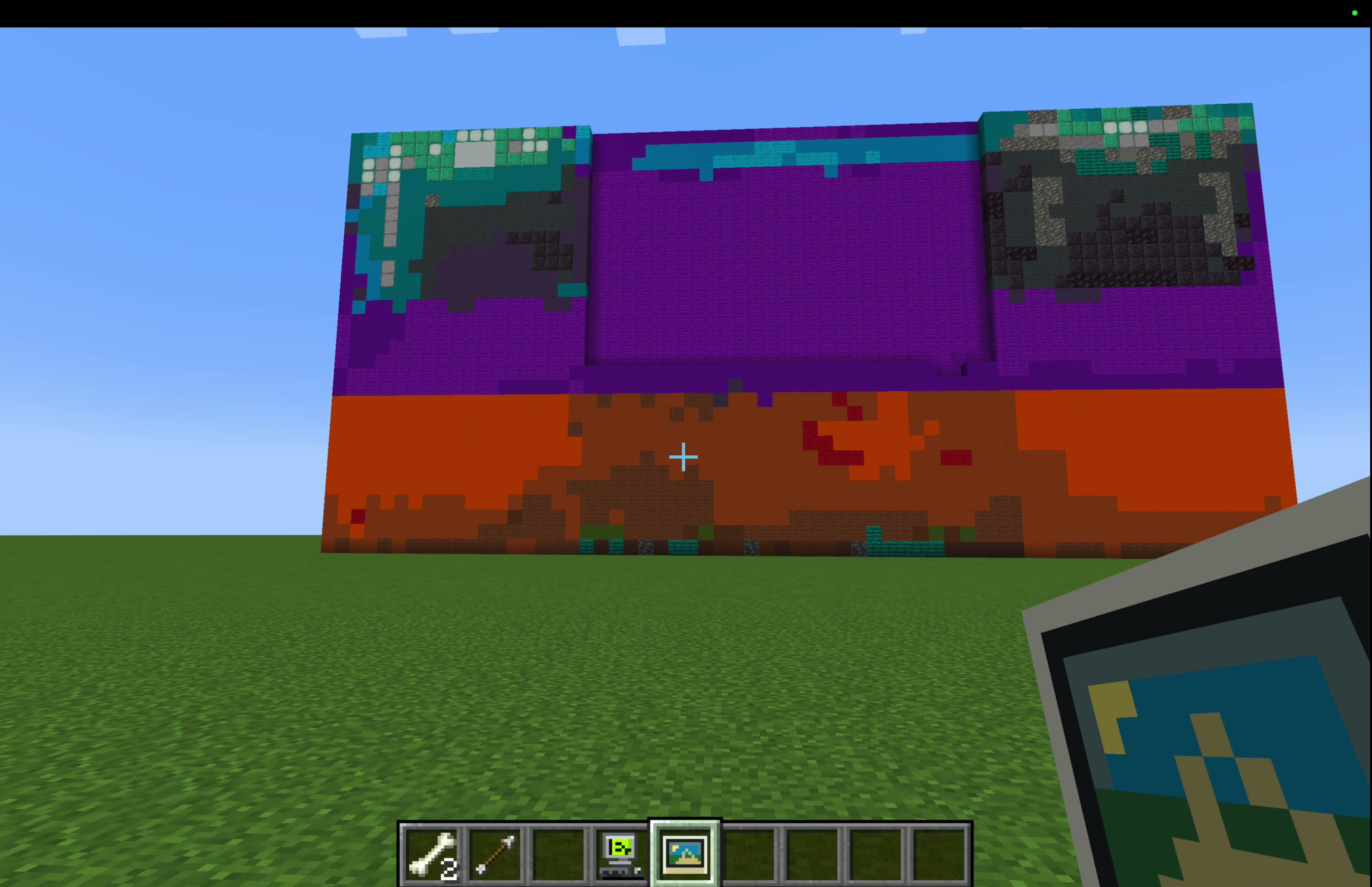
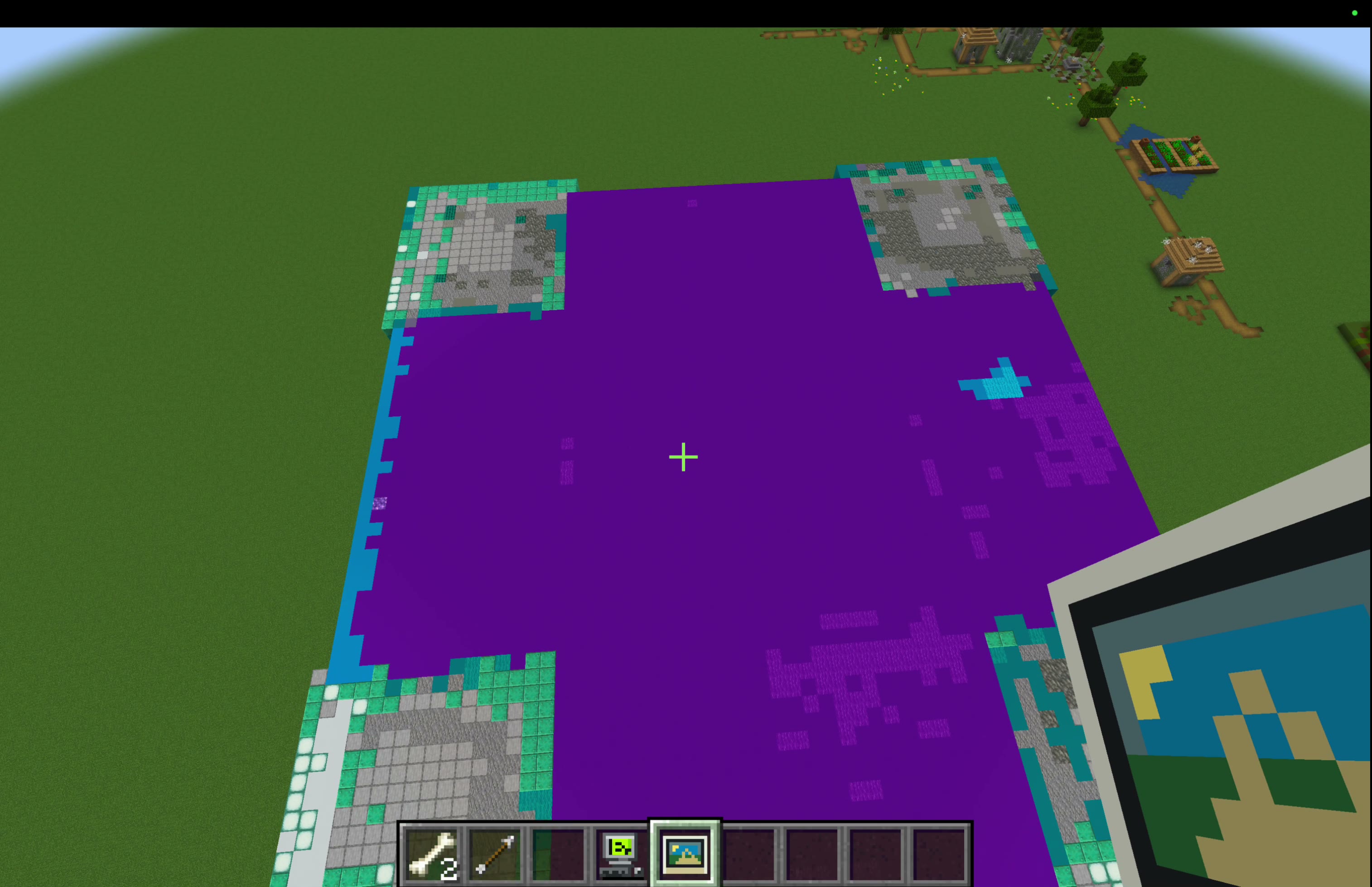
Two findings. First, the positive constraint failed the same way P1 and P2 did: the output is a large purple-orange slab, nowhere near 8×8, and not a “base.” Second, the negative constraint. Regions that look like lava or water turned out, on an in-game F3 block check, to be solid color-matched blocks. The orange band reads as minecraft:orange_concrete with targeted fluid empty.
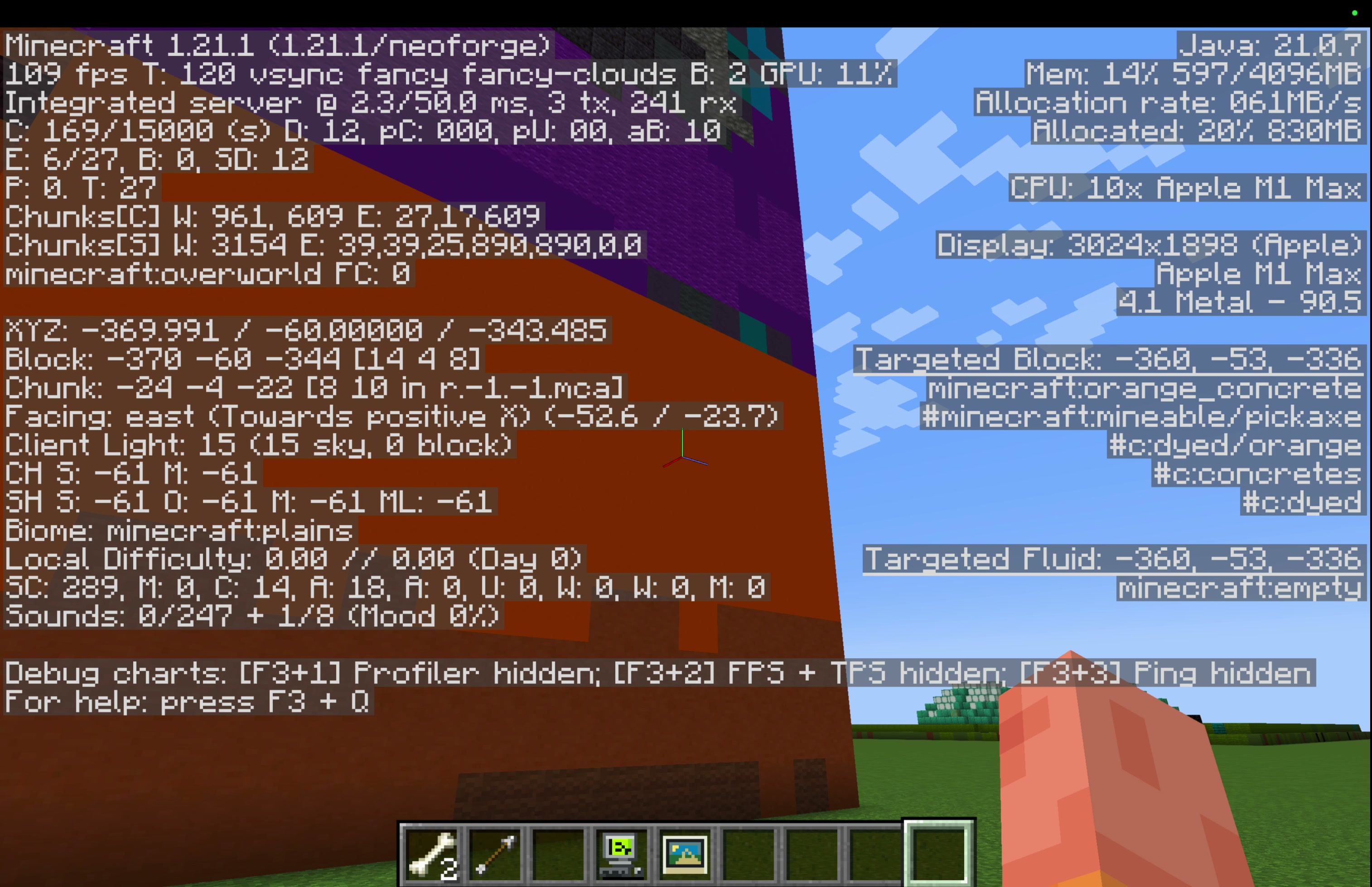 F3 debug, crosshair on the lava-colored band:
 Targeted Block: minecraft:orange_concrete, Targeted Fluid: minecraft:empty — a solid block chosen by color, not a forbidden material.
So no forbidden material was actually placed, but that’s because the voxelizer’s palette is solid colored blocks and it never places fluids or functional blocks, not because it parsed and honored “do not use.” The negative constraint is met vacuously, by palette limitation, not by rule-following.
Where it’s strong vs. weak
Strong: single cohesive 3D forms with a clear visual prior — sphere, tower, castle gatehouse. Fast (about a minute), recognizable, and it will render named sub-parts (two towers, a gate, battlements) and even a functional opening (a walkable gate). Material is sensible when the canonical form implies it (castle implies stone).
Weaker:
- Discrete constraints get dropped. Exact dimensions (“15×15”, “8×8”), specified materials (“wood and stone”), and positions (“door on the south side”) did not come through. (P1, P2, P5)
- Multi-object scene composition (n=3, none coherent). Across three scene prompts, none produced a coherent, usable arrangement: one hung, one scattered into inconsistent-scale fragments, one collapsed into a single blob. The elements can appear; the composition did not.
- Negative constraints are not meaningfully enforced. Regions that looked like lava or water were solid color-matched blocks with no fluid. Forbidden materials are avoided by palette limitation, not by following the rule.
- No validation signal. The workflow surfaced no self-check or score for whether it met size, material, door, or function.
Across eight prompts a consistent line emerges: single cohesive forms are handled well, while scenes of independent objects and discrete or negative constraints are not. That’s exactly what you’d expect from a mesh-to-voxel pipeline that generates one shape and color-maps it to blocks.
What this means if you’re using it
If you want a quick, recognizable hero object — a tower, a statue-ish form, a gatehouse — Higgsfield’s prompt-to-build is genuinely useful and fast. Lean into canonical shapes and let it pick the material.
If you need a build to satisfy something — an exact footprint, a specific material, a door where you asked for one, a multi-building scene with sensible spatial relationships — it isn’t there yet in my samples. The gap isn’t shape quality; it’s everything layered on top of shape: constraints, composition, function, and any signal that the output actually met the ask. Treat the output as a starting silhouette to edit, not a finished, spec-correct build.
Limitations
- Scene composition is n=3. Enough to say it produced no coherent scene in any try, but still a small sample.
- One trial per prompt. Generation is stochastic; I did not sample variance, and a given prompt might do better on a re-roll.
- Single rater, scoring from screenshots plus a walkthrough.
- Credit-limited session (started with 10 credits, about 1.15 per build), so two planned prompts went unrun.
- Figures are frames pulled from a daytime screen recording (the in-game screenshot key conflicted with macOS during the live session). The builds are unchanged; only lighting and clarity differ from the live run.
The honest one-line takeaway: in this session Higgsfield’s Minecraft prompt-to-build handled shape well and everything that makes a shape correct poorly. If you test it yourself, the fastest way to see the split is to run one canonical single form (a gatehouse) and one constrained one (a 15×15 cottage with a south door) back to back.
🎧 More Ways to Consume This Content
I occasionally advise small teams on backend reliability, Go performance, and production AI systems. Learn more: /services
Comments
This space is waiting for your voice.
Comments will be supported shortly. Stay connected for updates!
This section will display user comments from various platforms like X, Reddit, YouTube, and more. Comments will be curated for quality and relevance.
Have questions? Reach out through:
Want to see your comment featured? Mention us on X or tag us on Reddit.