Agent Memory Is a Cache Coherence Problem
Lossless curated notes vs lossy auto-compression with vector recall: two AI-memory designs that fail differently. One fails like a cache — classical systems already mapped it.
Read MoreLossless curated notes vs lossy auto-compression with vector recall: two AI-memory designs that fail differently. One fails like a cache — classical systems already mapped it.
Read More
Why Claude Code uses grep instead of RAG: a cost-curve argument, audited against the source — with the Explore vs Fork A/B test nobody mentions.
Read More
Go channels are synchronization primitives, not queues. They deliver backpressure only when the producer is bounded — and that's where the real OOM hides.
Read More
Same model, same test cases, 20% better results. 7 out of 8 fixes were pure code, zero LLM cost. Here's exactly what I changed and why it worked.
Read More
Don't bind to a single AI. Run three in competition, make the final call yourself, and let results judge everyone. The operating model for staying valuable in the AI age.
Read More
Most discussions of Node vs Go concurrency stop at 'async vs threaded.' The real split is deeper — where does context switching happen, and what is the unit of scheduling?
Read More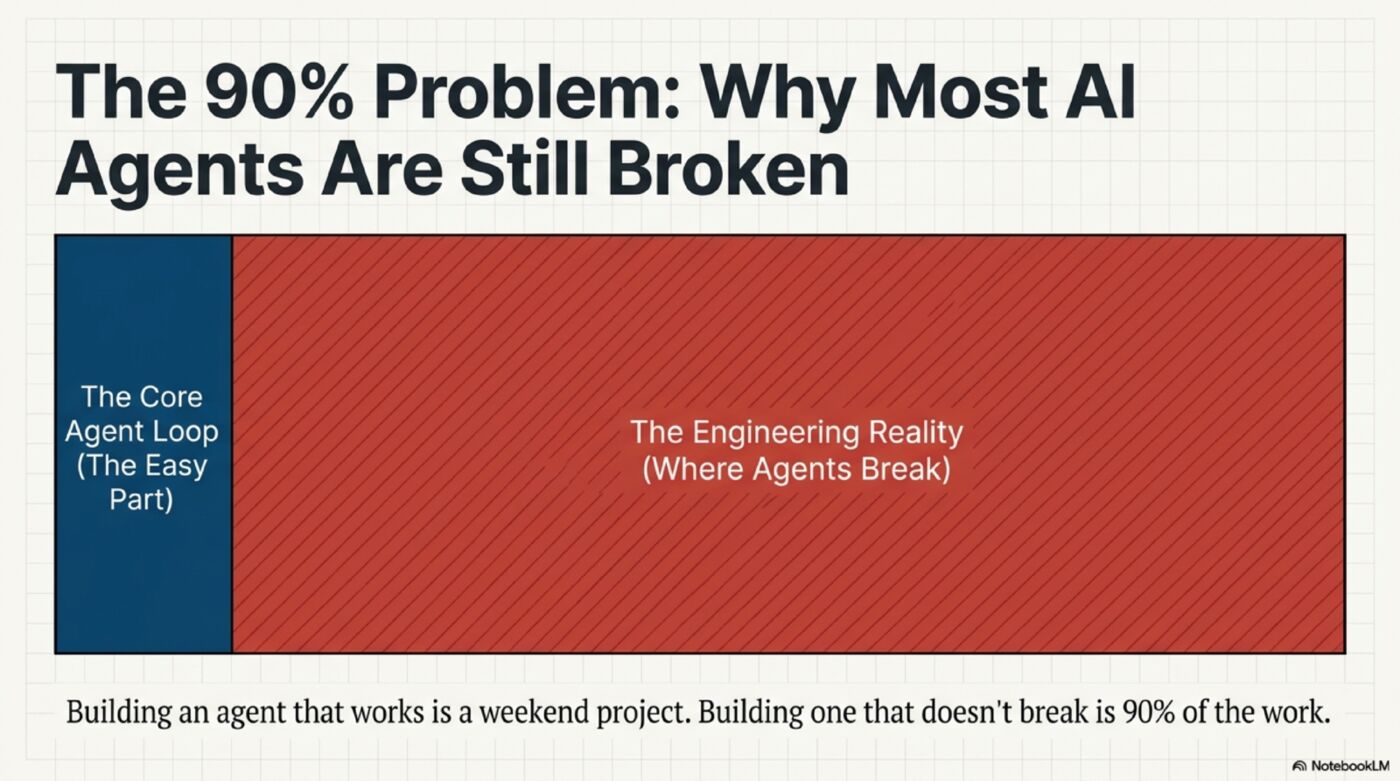
Building an AI agent that works is easy. Building one that doesn't break is 90% of the work. Here's what that 90% actually looks like — from leaked source code and production A/B data.
Read More
How to use OpenAI's Codex plugin inside Claude Code — turning Claude Opus and GPT-5.4 into a dual-brain coding system. Setup, commands, rescue workflows, and when each brain wins.
Read More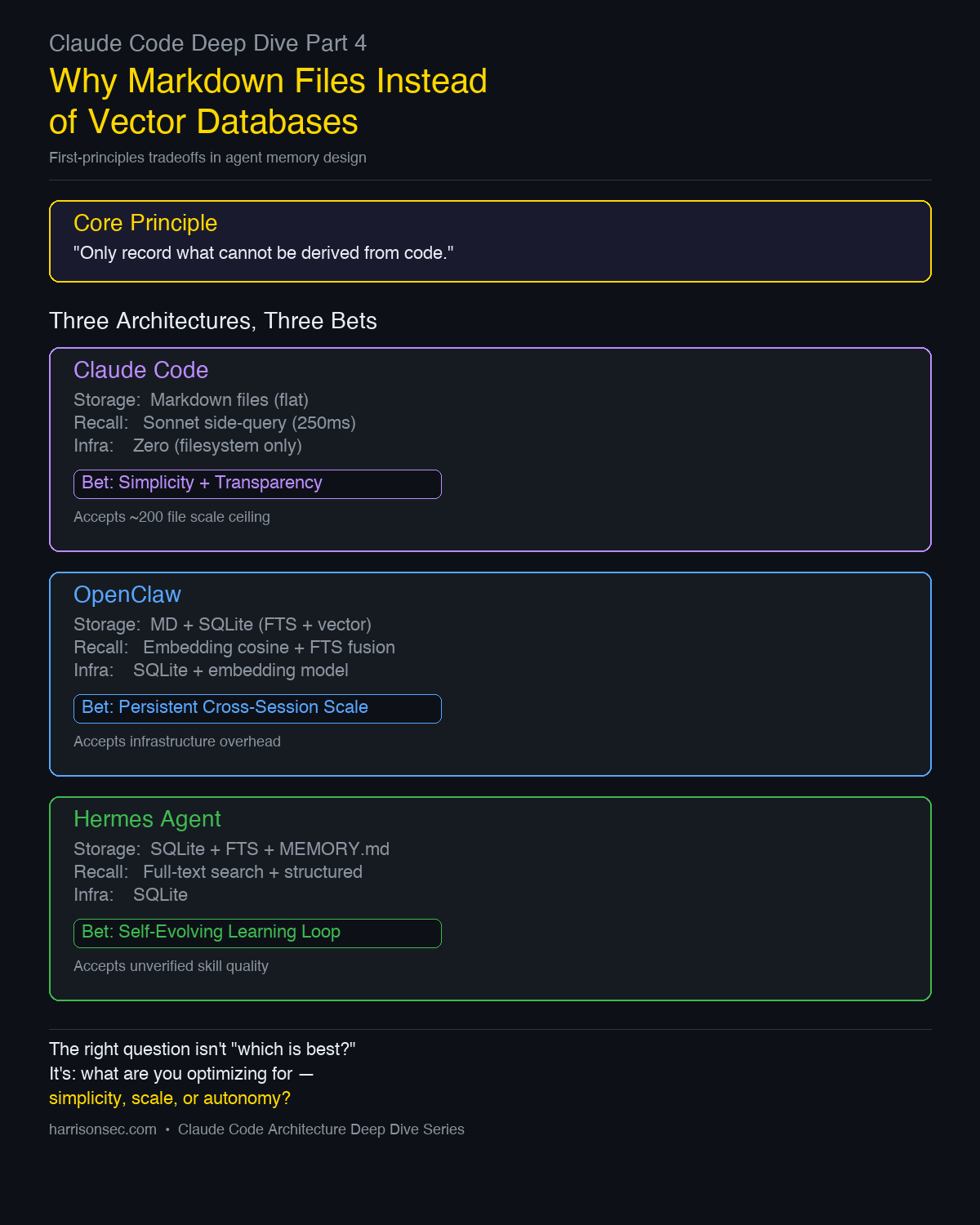
Claude Code's memory system looks simple on purpose. This piece breaks down the tradeoffs behind Markdown memories, Sonnet side-queries, and the decision to avoid vector databases.
Read More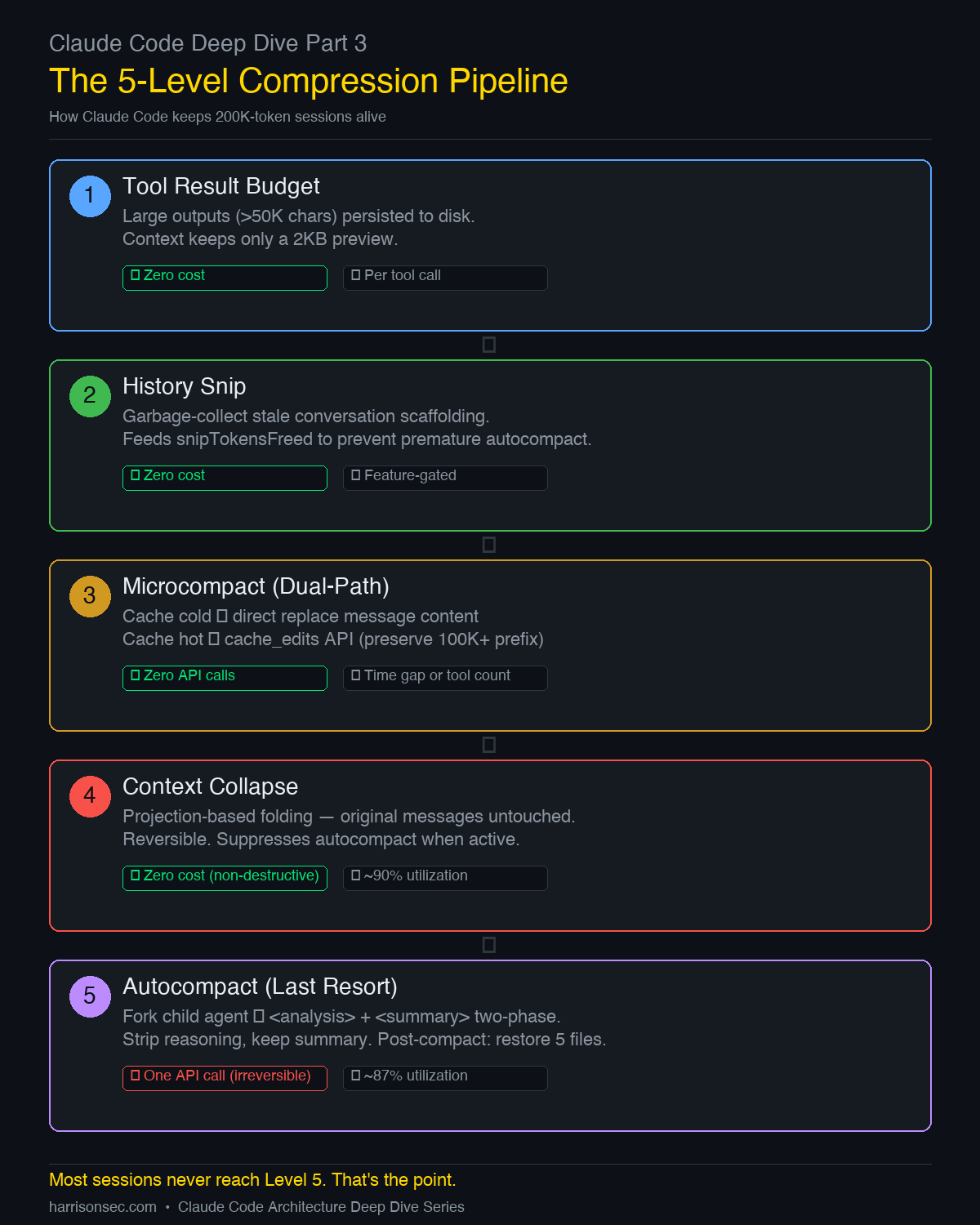
How Claude Code's context compression pipeline survives 1M-token sessions: 5 levels of progressive compression, dual-path algorithm, source walk-through.
Read More© 2026 HarrisonSec. All rights reserved.