SecurityLab track — runtime and distributed systems, kernel debugging, eBPF, Go concurrency, memory models, bootloaders, and assembly walkthroughs. Code-first, source-cited, mechanism-deep.
Long-form writing and video on runtime, distributed systems, and kernel internals — the layers below the application where most production reliability is actually decided.
Topics: Go runtime and concurrency, distributed systems patterns (RPC, queues, idempotency), kernel debugging with GDB/QEMU, eBPF, memory models, bootloaders, and assembly walkthroughs.
Companion to the HarrisonSecurityLab YouTube channel. Blog and video are listed below — most recent first.
Blog
sync.Pool is the Go feature most likely to be used incorrectly. A working engineer's guide to when pooling buffers actually saves GC pressure, when it just adds complexity, and the benchmark methodology that tells the difference.
2026-03-05
7 min read
Blog
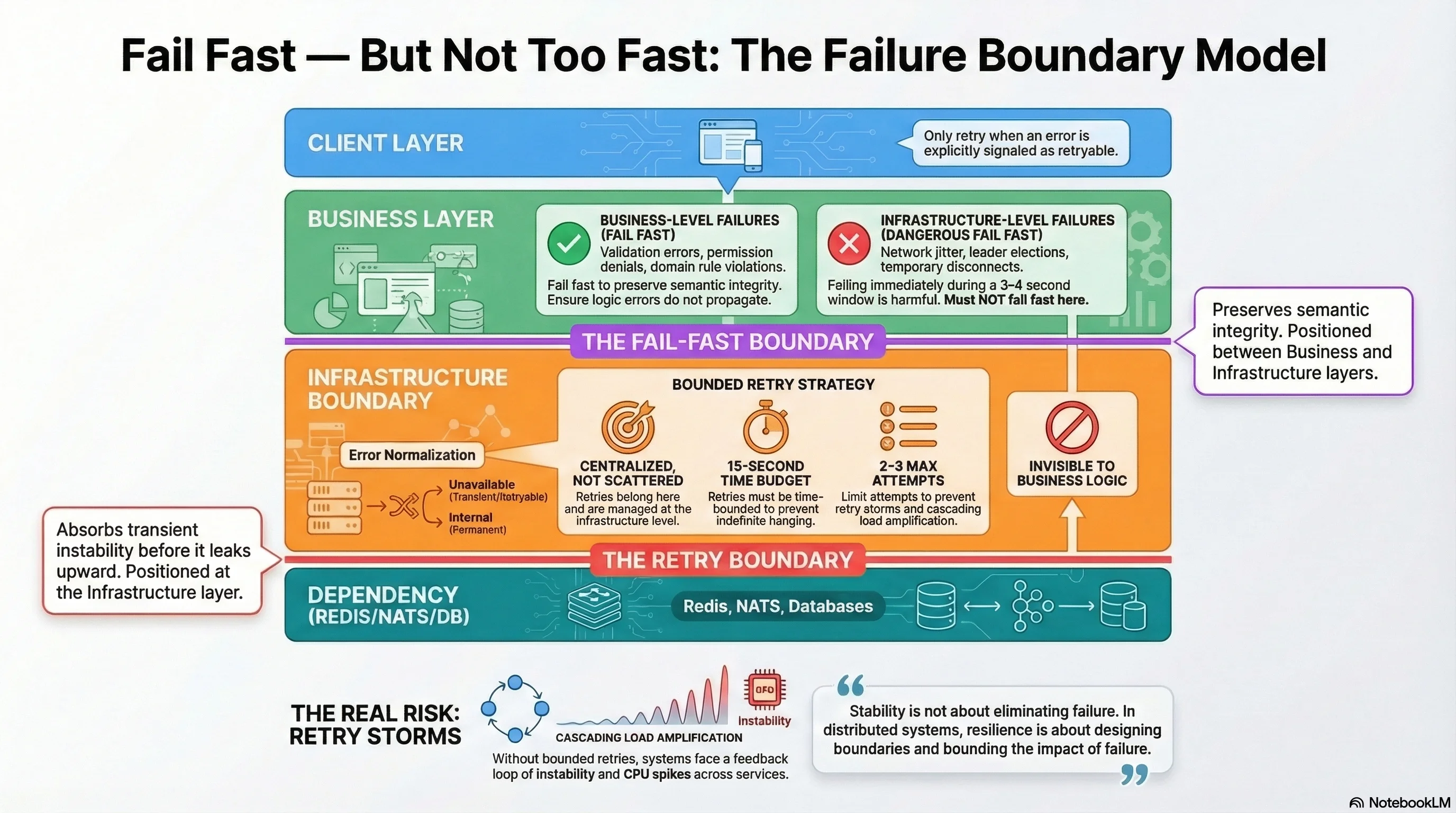
Why blind fail-fast during leader election causes retry storms, and how bounded retry budgets, failure boundaries, and error normalization create predictable distributed systems.
2026-03-04
13 min read
Blog
The most common microservices mistake isn't picking the wrong transport. It's misreading who is responsible for knowing the work finished. A field guide to completion ownership in RPC, message bus, and event-driven systems.
2026-02-28
8 min read
Blog
All three are 'messaging systems.' None of them is interchangeable with the others. A practical breakdown of NATS, Kafka, and MQTT — by the actual design axes that determine which one breaks when you misuse it.
2026-02-24
9 min read
Blog
Docker is not a virtual machine. Kubernetes is not a container tool. Fifteen years in, both are misunderstood — and misused — as a result. A working engineer's explanation of what they actually changed.
2026-02-21
10 min read
Blog
The 'which language is fastest' benchmark wars miss the real question. Rust, Go, Java, and Python aren't competing on the same axis. They're tuned for different scaling strategies — and picking the wrong one costs you years.
2026-02-20
9 min read
Blog
The unit-vs-integration framing is a junior lens. Production Go backends need a different taxonomy: deterministic tests, contract tests, race tests, and fidelity tests. The ones that actually catch production bugs.
2026-02-18
10 min read
Blog
Tracing systems optimize for signal-to-noise. Billing systems optimize for accuracy and auditability. They look similar and they are not the same thing. A dual-path architecture for running both without cross-contamination.
2026-02-15
10 min read
Blog
context.Context is not documentation, not a metadata bag, and not optional. A production-hardened guide to cancellation propagation, the background-goroutine trap, and the patterns that keep services alive when downstreams slow down.
2026-02-13
10 min read
Blog
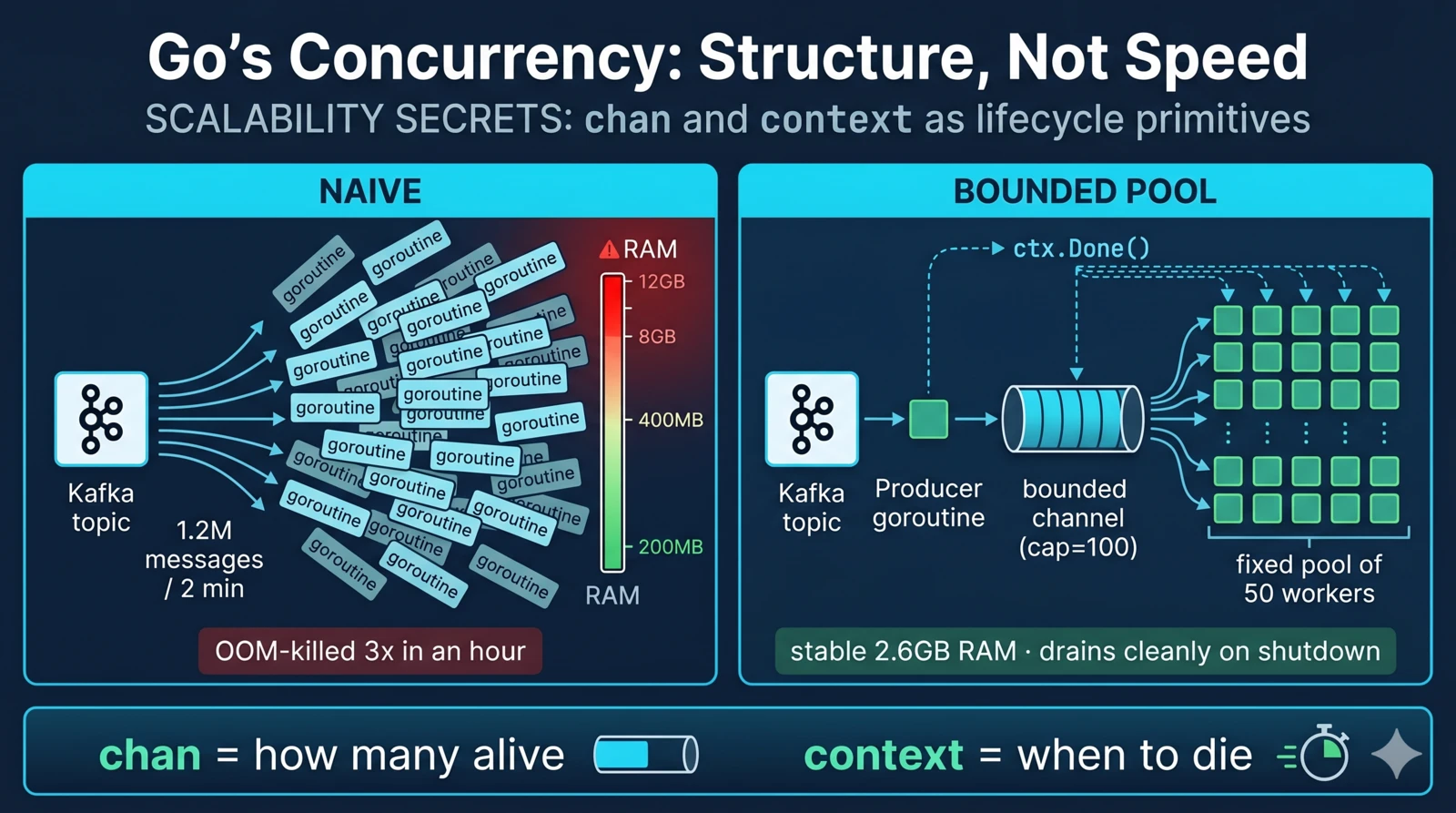
After a few years writing production Go, I stopped thinking of chan as a data pipe and context as a parameter. They're both lifecycle primitives — chan draws the boundary of 'how many alive', context draws the boundary of 'when to die'. Here's why that mental model changes the code you write.
2025-11-21
10 min read